Polyglass Announces SPARC Launch— A Next Generation State-Of-The- Art Roofing System Spec Building And Submittal Package Configurator

This platform will become a Polyglass Contractors’ one-stop-shop

Commercial and residential roofing industry leader Polyglass has announced the release of their next-generation state-of-the-art roofing system spec building and submittal package configurator for contractors. Polyglass is a pioneer of the self-adhered membrane and boasts over fifty years of experience with facilities across the globe. They have access to the latest technologies and offer advanced technical support to contractors. Polyglass’s latest support-centered technological release, SPARC TM, boasts an extremely intuitive user experience to help contractors simplify complicated and time-consuming processes. The new UI allows contractors to select, combine, and add any of the different documents required for a Submittal package in less than 15 minutes. This system will spread across all processes, from creating guided Roof System assemblies to submitting warranty requests.

Features and Benefits

SPARC walks users through selecting roof system components. Then,  will generate a document combining any number of the following as needed: a Good Standing letter, long-form specification (3-part CSI format), system letter (with or without code approval listings), Technical Data Sheets/Product Design Specifications and Safety Data Sheets, standard detail drawings indicating selected Products, warranty samples, substitution request form, and a 3D cutout rendering of each section of the roof assembly with a realistic appearance. Everything will be organized comprehensively and easy to walk customers through.

The customized submittal packages support Contractors with all commercial roofing project needs. SPARC will allow them to present and showcase approved Polyglass roofing systems to customers. SPARC is exclusive to Preferred and Quantum Contractors via the Polyglass Contractor Program. This platform will become the Polyglass Preferred and Quantum Contractor’s one-stop-shop for all Commercial Roofing project’s needs, from creating a guided Roof System assembly, to submit a request for Warranty once the project is awarded.

About Polyglass

Polyglass U.S.A., Inc. is a leading manufacturer of high-quality modified bitumen roofing and waterproofing solutions. Acquired in 2008, Polyglass is a proud member of the Mapei Group; the family owned, 3-billion-dollar global building materials industry leader. Together we represent over 100 years of combined experience in the production and support of building envelope products and solutions, with 83 manufacturing facilities spanning 36 countries on 5 continents.

Polyglass is committed to adding value by producing cutting-edge products that meet or exceed the needs of their customers. Their goal is to provide a professional experience, focusing on quality products and efficient service while meeting the objectives of our shareholders and employees.

Polyglass prides itself on innovative and quality roofing and waterproofing products that exceed the needs and expectations of its customers worldwide. This commitment is demonstrated daily by the people that work for Polyglass, where the customers’ needs always come first.

Contact Information

Interested contractors must first become a Registered Contractor with Polyglass to start upgrading. Registration is achieved by contacting local Polyglass sales representatives. Registered Contractors can complete the Contact Us form on Polyglass’ website or contact their representative to learn more about SPARC.


####

Contact:

Alexandra Helton

(561)632-0832

ahelton@polyglass.com

Polyglass Partners with the Dolphin’s Challenge Cancer for the Seventh Year in a Row

DEERFIELD BEACH, FL – On Saturday, February 25th, 2023, Polyglass U.S.A., Inc., a leading manufacturer of roofing and waterproofing systems, partnered for the seventh year in a row with the Dolphin’s Challenge Cancer (DCC) annual cycling & 5K run/walk event at the Hard Rock Stadium in Miami Gardens, Florida.

The DCC is the largest fundraising event in the NFL and represents the most significant known philanthropic pledge in all professional sports. As a “Fighter Partner” sponsor, Polyglass U.S.A. Inc. Team contributed over $66,000 for innovative cancer research at Sylvester Comprehensive Cancer Center. 103 Polyglass employees and their families & friends walked, ran, or biked as part of the charitable event. “I am so very proud to be part of a company where giving back is simply a part of our DNA,” said Scott Lelling, Polyglass Marketing Director. “In our 7th year partnering with the DCC, our entire Polyglass community has walked, run, and biked hundreds of miles and raised many thousands of dollars for a cause that is very dear to all of our hearts.”

Among our Polyglass Team of seventeen cyclists, one of them, Bernard Pierre, our Polyglass AP Analyst, completed the 100-mile ride and said, “Doing a century ride is a battle. It is tough, and it takes a lot. The only reason I was able to complete the ride was because of the support around me that pushed me and sometimes even pulled me to the finish line. Yes, the century ride was a battle, and those dealing with cancer are battling consistently daily. I hope that the little I could do was to support and push them to the goal of beating cancer”.

The DCC is dedicated to improving lives by financially supporting cancer research at the Sylvester Comprehensive Cancer Center (SCCC). With the $10 million and counting raised at DCC XIII, the Dolphins have now raised more than $63 million of the $75 million commitment.

Polyglass is committed to giving back to the community and is proud to partner with and support local organizations. For more information on the DCC, visit https://dolphinscancerchallenge.com/.


About Polyglass 

Polyglass U.S.A., Inc. is a leading manufacturer of high-quality modified bitumen roofing and waterproofing solutions. Acquired in 2008, Polyglass is a proud member of the Mapei Group; the family owned, 3-billion-dollar global building materials industry leader. Together we represent over 100 years of combined experience in the production and support of building envelope products and solutions, with 83 manufacturing facilities spanning 36 countries on 5 continents.

Polyglass is committed to adding value by producing cutting-edge products that meet or exceed the needs of their customers. Their goal is to provide a professional experience, focusing on quality products and efficient service while meeting the objectives of our shareholders and employees.

Polyglass prides itself on innovative and quality roofing and waterproofing products that exceed the needs and expectations of its customers worldwide. This commitment is demonstrated daily by the people that work for Polyglass, where the customers’ needs always come first.


Contact:

Alexandra Helton

(561)632-0832

ahelton@polyglass.com

Join Polyglass at New York Build 2023 for their Initial Debut!

Connect in-person with Polyglass experts to discuss industry-leading roofing innovations and technology.

Polyglass U.S.A., Inc., a leading manufacturer of roofing and waterproofing systems in the United States, is pleased to announce its first participation at the New York Build 2023 Expo. Be sure to stop by their booth #810 on March 8-9th, 2023 at the Javits Center in New York, NY.

New York Build is the largest construction and design show for New York and the Tri-state area is set for the biggest edition yet at the Javits Center. This award-winning show, is officially supported by the State of New York and Mayor of New York. New York Build features: 350+ high-level speakers across 12 tracks; workshops, 300+ exhibitors, live demos, networking events; the USA’s largest meeting of Women in Construction and Diversity in Construction, and the Festival of Construction.

Polyglass will be featuring a wide range of products and technologies this year in their updated booth, with plenty of information and educational opportunities for contractors to learn the features and benefits of these products.

Featured products

Some highlighted products & technologies at the Polyglass booth include:

  • ADESO® Self-Adhered Technology – Polyglass’ patented dual-compound self-adhered (SA) membranes feature a true APP or SBS formulation on the top weathering side and an aggressive self-adhered formulation on the bottom side of the reinforcement. This technology provides easy and effective application, enhanced lap sealing and solutions for multiple surface types.
  • Commercial Roofing Systems– Polyglass provides flexible, custom-designed roof system configurations for commercial roofing. From self-adhered membranes to energy efficient liquid roof coatings, Polyglass products can accommodate a wide range of roof types, surfaces, climates and weather conditions.
  • Building Envelope Solutions – With a long-standing strategic commitment to investing in R&D, our Polyglass family and vision for the future have grown exponentially. Evolving through innovation, our company offers high performance and exceptional quality Building Envelope Solutions. Check out some of the most-performing products: Mapeproof™ AL Pro, pre-applied, fully bonded HDPE waterproofing membrane for below grade applications; Mapethene™ HT60 and Mapethene™ LT60, post applied self-adhered waterproofing membranes for below grade structures and elevated decks; Mapeseal™ GC, single-component, fast-curing, monolithic waterproofing membrane that can be applied to damp and green concrete.
  • SPARCTM: SPARC, the revolutionary state-of-the-art roofing system configurator will eclipse anything you have seen before in the Commercial Roofing arena. With SPARC, you will be able to create, customize and send specs and submittal packages to Polyglass contractors in less than 30 minutes!

Attend to learn about major construction opportunities in residential, commercial and infrastructure projects across New York and the Tri-state region. Be sure to visit Polyglass at the the New York Build 2023 Expo at Booth #810. For more information about Polyglass and their products contact a sales representative, or visit Polyglass.us.


###

About Polyglass

Polyglass U.S.A., Inc. is a leading manufacturer of roofing and waterproofing systems. Known for its self-adhered modified bitumen roofing systems based on the company’s patented ADESO® Technology and CURE Technology®, Polyglass also produces a full line of premium roof coatings and roof maintenance systems. An ISO 9001:2015 certified company, Polyglass provides quality products and adds value through innovation. For more information about the premium products and services offered by Polyglass, call 800.222.9782 or visit polyglass.us.


Contact:

Alexandra Helton

(561)632-0832

ahelton@polyglass.com

Polyglass invites you to join them Live at the 2023 International Roofing Expo

Connect in-person with Polyglass experts to discuss industry-leading roofing innovations and technology.

Polyglass U.S.A., Inc., a leading manufacturer of roofing and waterproofing systems in the United States, is pleased to announce its participation at the 2023 International Roofing Expo live in Dallas, TX March 7-9th, 2023.

As IRE is one of the roofing industry’s most reputable and widely attended trade expos, Polyglass is excited to exhibit once again and showcase their new updated booth, new products & programs, and technologies. IRE offers a great opportunity for roofing industry professionals to convene, share strategies, drive business, discover new technologies, discuss best practices, and explore the latest products in the market.


Presentations and demos

Polyglass will be featuring some of their products and technologies every day of the show at their demo booth. Live demonstrations from Polyglass experts will feature  Polyflash® 1C flashing compound, steep-slope membranes, and SeaLLap® ULTRA.

Mark your calendar for Polyglass’ presentations at IRE. First, it will be the IRE Session Presentation TU02-Steep-Slope Commercial Roofs – Making them Watertight by Marco Sieber, Jimmy Akins & Steve Wadding on Tuesday, March 7th, 7:45 AM – 9:15 AM at Room C147.

The second one will be SPARC™ – The Next Spec Gen by Chris Gory, Marco Miotto & Jimmy Akins on Tuesday, March 7th, 12:30 PM – 1:15 PM at Booth #7902. You can add to your show planner once registered for the event.


Featured products

Featured products that Polyglass will showcase at this year’s show include:

  • ADESO® Self-Adhered Technology– Polyglass’ patented dual-compound self-adhered (SA) membranes feature a true APP or SBS formulation on the top weathering side and an aggressive self-adhered formulation on the bottom side of the reinforcement. This technology provides easy and effective application, enhanced lap sealing and solutions for multiple surface types.
  • Polystick® Underlayments – Easy-to-install underlayment products for steep-slope roofs. Equipped with revolutionary ADESO® self-adhered technology, Polystick roof underlayments not only provide your customers with the most advanced and time-tested roofing technology on the market — they also save contractors time and money on installation cost.
  • Polyflash® 1C – When combined with PolyBrite Reinforcing Polyester, this one-component, moisture-cure silane modified polyurethane flashing compound seals a wide range of roofing and waterproofing details, including walls, curbs, vents, roof drains, pitch pans and unusually shaped penetrations.
  • And much more!


Be sure when you stop by the booth to speak with a Polyglass Roofing Expert, ask about the Polyglass Contractor Program, learn about Polyglass’ new spec generator SPARC, and sign up for Club Premio, Polyglass’ new and improved Contractor Loyalty and Rewards Program.


Join Polyglass at this year’s International Roofing Expo, live and in-person at booth #3712, and a demo booth #3917,. Register today or contact Polyglass to learn more about their innovative roofing and waterproofing products.


###


About Polyglass

Polyglass U.S.A., Inc. is a leading manufacturer of roofing and waterproofing systems. Known for its self-adhered modified bitumen roofing systems based on the company’s patented ADESO® Technology and CURE Technology®, Polyglass also produces a full line of premium roof coatings and roof maintenance systems. An ISO 9001:2015 certified company, Polyglass provides quality products and adds value through innovation. For more information about the premium products and services offered by Polyglass, call 800.222.9782 or visit polyglass.us.


Contact:

Alexandra Helton

(561)632-0832

ahelton@polyglass.com


Polyglass to Showcase Innovative Technologies at the 2023 IIBEC International Convention and Trade Show

Polyglass U.S.A. Inc., a leading manufacturer of roofing and waterproofing solutions, announces it will be highlighting its industry-leading modified bitumen membranes, commercial roofing systems, and Building Envelope Solutions at the 2023 IIBEC International Convention and Tradeshow, taking place March 3-6th, 2023 in Houston, TX.

IIBEC’s annual event features live, in-person educational seminars, a two-day trade show, and live product demonstrations. IIBEC offers cutting-edge information regarding advanced technologies, design, construction, maintenance, and repair of modern and/or older building enclosures.

Polyglass will be featuring a wide range of products and technologies this year in their updated booth, with plenty of information and educational opportunities for contractors to learn the features and benefits of these products.

Highlighted products & technologies

Some highlighted products & technologies at the Polyglass booth include:

  • ADESO® Self-Adhered Technology– Polyglass’ patented dual-compound self-adhered (SA) membranes feature a true APP or SBS formulation on the top weathering side and an aggressive self-adhered formulation on the bottom side of the reinforcement. This technology provides easy and effective application, enhanced lap sealing and solutions for multiple surface types.
  • Commercial Roofing Systems– Polyglass provides flexible, custom-designed roof system configurations for commercial roofing. From self-adhered membranes to energy efficient liquid roof coatings, Polyglass products can accommodate a wide range of roof types, surfaces, climates and weather conditions.
  • Building Envelope Solutions – With a long-standing strategic commitment to investing in R&D, our Polyglass family and vision for the future have grown exponentially. Evolving through innovation, our company offers high performance and exceptional quality Building Envelope Solutions.
  • SPARC: SPARC®, the revolutionary state-of-the-art roofing system configurator will eclipse anything you have seen before in the Commercial Roofing arena. With SPARC®, you will be able to create, customize and send specs and submittal packages to Polyglass contractors in less than 30 minutes!

Presentations and Demos

Mark your event calendar for Polyglass’ presentations and demos at IIBEC. Their first presentation will be SPARC™-The Next Spec Gen. by Chris Gory, Marco Miotto & Jimmy Akins on Saturday, March 4th, 5:15 pm – 5:45 pm. It will be followed by the Polyglass USA Inc. Lateral Water Migration Demo & Presentation by Mark Franciosi on Saturday, March 4th, 6:15 pm – 6:45 pm.


Be sure to visit Polyglass at the 2023 IIBEC International Convention and Tradeshow at Booth #623. For more information about Polyglass and their products contact a sales representative, or visit Polyglass.us.


###

About Polyglass

Polyglass U.S.A., Inc. is a leading manufacturer of roofing and waterproofing systems. Known for its self-adhered modified bitumen roofing systems based on the company’s patented ADESO® Technology and CURE Technology®, Polyglass also produces a full line of premium roof coatings and roof maintenance systems. An ISO 9001:2015 certified company, Polyglass provides quality products and adds value through innovation. For more information about the premium products and services offered by Polyglass, call 800.222.9782 or visit polyglass.us.


Contact:

Alexandra Helton

(561)632-0832

ahelton@polyglass.com

Polyglass Announces New and Improved Rewards and Loyalty Program!

Club Premio launches with an improved user platform, easier invoice submissions, and tiered rewards.

Industry leader Polyglass USA has announced the launch of Club Premio™ their new and improved contractor rewards program. Their previous rewards program Club Premio has been retired, though existing customers will find their history and built-up points seamlessly transferred. In their place, Polyglass is releasing Club Premio. The new service comes with an easy-to-navigate user interface, tiered rewards, improved learning zone, and other upgraded features.

Club Premio is designed to be easy to use and offers an expanded catalog of rewards. Contractors can earn points by submitting invoices with qualifying products and redeem points through the online portal for a variety of items, including gift cards, travel products, experiences, electronics and more. The mobile and online portal allow easy invoice submission, point tracking, and reward redemption.

Polyglass USA is a manufacturer of roofing and waterproofing systems that works directly with contractors to deliver state-of-the-art products. They provide high-quality, professional, dedicated customer service and technical support to meet and beat expectations. Founded in Italy, Polyglass now serves North America.

User-Friendly Navigation

Polyglass collected feedback from their current customers to create the new rewards system.

Club Premio premiers with an improved user platform.

Now, uploading invoices is easy – contractors can drag and drop invoice files into the platform online or take a snapshot on a mobile device. They can easily access their current point status, track submissions for new invoices, and view redemption history.

The portal is clean and easy to navigate, with quick option menus on the top bar. Club Premio also includes a Learning Zone where contractors can find videos and information about Polyglass products. Watching these videos is not only informative but also connected to rewards. Contractors can earn points while they catch up on the latest products Polyglass has to offer or refresh their memory on other products.

How to Sign Up and Use

Signing up for Club Premio is easy! Visit www.club-premio.com and fill out the registration form. You will receive an email from Club Premio once your registration form is accepted. You will also receive monthly emails with account status updates and information about upcoming promotions.

After initial registration, contractors should take some time to familiarize themselves with the available menus and rewards catalog.

Seamless Transition for Existing Users

Contractors already enrolled in Polyglass’ previous rewards program, Club Premio, do not need to re-register with Club Premio. Polyglass has already transitioned account information, current points and historical data, such as submitted invoices and reward redemptions, to the new service.

Contractors should go to www.club-premio.com. On the login screen, select ‘forgot password’ and type in the email used for Club Premio. Contractors will receive an email prompting them to reset their password. They can use the link to update their information, accept the new Terms & Conditions, and set their password for the new service.


###

About Polyglass

Polyglass is an ISO 9001:2015 Certified, leading manufacturer of modified bitumen membranes and roof coatings for low- and steep-slope applications. Utilizing the most technologically advanced manufacturing process in the industry, Polyglass operates six state-of-the-art manufacturing facilities — five in North America. Polyglass is part of Mapei® Group, a multi-billion dollar manufacturer in the building industry with over 31 research centers and more than 81 production facilities in 35 countries.

Polyglass® is a pioneer of the self-adhered membrane and boasts over fifty years of experience. They have access to the latest technologies and offer advanced technical support.

Contractors who wish to learn more can reach out to Polyglass through their online form or by calling customer service at (800) 222-9782.


Contact:

Alexandra Helton

(561)632-0832

ahelton@polyglass.com

Acrylics – Fad or Forever?

The latest environmental focus on using “cooler” surfaces to reduce Urban Heat Island (UHI) effects in urban spaces has led many to desire materials with increased reflectivity and emissivity. At this same time, the built environment has increased its focus to include all exposed building surfaces, such as the four walls, and not just building tops or roofs. Is this a new trend or fad, or is it a concept that has been around for decades and is just not widely discussed? Truth be told, it’s a bit of both. Let’s look at why.

A History of “Cool” Building Materials

Various water-based acrylic materials types have already been used in the construction industry for several decades, and light colors are also not new in construction. For example, whitewashing wood and other permeable surfaces is not a solution from the 21st century but the century before, with a history of 100-plus years. 

From this perspective, using light colors in construction is not a contemporary fad but a historical approach. Granted, their earlier application was more about surface protection and aesthetics than cooling building surfaces, but light colors were effective just the same.

In addition, long before we gave much to UHI effects, reflective coating materials were widely used in the built environment to protect underlying surfaces and, at the same time, cool surfaces. 

As we discover and use new technology to formulate protective coatings, they become more effective at cooling the surfaces they are applied to and protecting them from UV damage. One example is the growing understanding of using titanium dioxide (TiO2) and other UV-inhibiting materials in acrylics for a roof or wall coating to create “cooler” surfaces. 

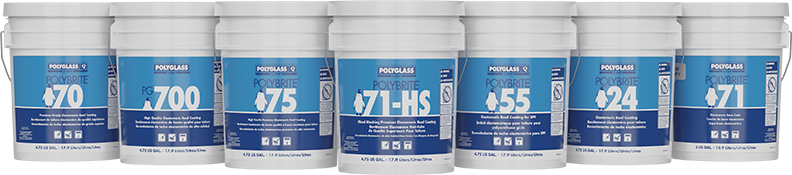
Elastomeric Roof Coatings

Acrylics – A Means of Sustainable Surface Cooling and Protection

Various products and gadgetry are sold and promoted to protect surfaces, many with promises too good to be true. That said, using acrylic polymers, protective coatings are very effective at protecting and cooling the surface and typically use light colors, such as whites and off-whites. These are also the most cost-effective for use on roofs to cool and protect them. 

Top Benefits of Acrylic-Based Roof Coatings

Many manufacturers and varieties of acrylic-based coatings are available to coat most roofing membrane types. Depending on the make-up of the roof surface, preparation and primers are not only recommended but may be necessary if a good adhesive bond is to be achieved. 

Building owners, developers, and environmental-based agencies pursuing greater sustainability are looking for product longevity first and foremost. For obvious reasons, the greater its durability, the less often a roofing product must be replaced, which ultimately keeps waste out of landfills and other waste streams.

Using acrylics to protect new and existing roof systems is a viable and cost-effective means to add longevity to any structure, be it for vertical (walls) or horizontal (roofs) surfaces. Acrylic formulations offer not only high reflectivity and surface cooling but also deliver the bonus of surface protection. This keeps the damaging effects of UV exposure from directly impacting the surface. The less degradation, the longer the coating and the underlying materials (i.e., roof surface) will last, which extends the life of the roof and building and promotes sustainability. 

As we coat the walls and roofs of new buildings with exterior paints or other finishes, these surfaces can also greatly profit from a protective acrylic coating. Like the benefits of sunblock on your skin to prevent sunburn, a quality acrylic coating applied to a new(er) roof will protect it from the damaging effect of years of UV exposure.

Even less common roof types and conditions can benefit from a protective acrylic coating. Examples include architectural and structural metal roofs, buildings, and many single-ply membranes. Unusual and specialized constructions are also candidates for the benefits of acrylic coatings.

Your Work is as Good as Your Product Choice

It is vital to ensure your product choice is suitable for all known project conditions. Research information (from Product Data Sheets, for example) on the product before a final decision, and when in doubt, reach out to Polyglass U.S.A., Inc.

Polyglass offers various acrylic polymer-based coatings and accessories to suit your projects’ needs. You can rely on our Polyglass experts to assist you through the product selection process and to answer all your roof design and installation queries. 


Roof Cement Versus Roof Mastics – Is There a Choice?

Regardless of who you ask, the decision between using roofing cement, roof mastics, flashing cement, or a cold adhesive is confusing for most. So, who is to blame for this confusion? Most often, as manufacturers, we need to look in the mirror as a source, while old habits in the phrases or slang words we use while in the field as installers are another. Responsibility for this underlying confusion between roof cement and roof mastics also lies with the ASTM standards for this material class. The ASTM has conventionally named this product class a roof cement, not a roof mastic (See ASTM D 4586 Standard Specification for Asphalt Roof Cement – Asbestos Free).

Should I Use a Roof Cement or Roof Mastic?

When looking closely at these different types of materials, the reality is that in nearly every case, we find more similarities than differences – roof cement and roof mastics are the same. Often the term “mastic” is used in reference to its application as an adhesive to bond layers, which is thinner, usually applied by spray or squeegee, and not used as a topical application. Mastics (which are much thicker) are typically a topical application and applied by a trowel. 

To add to this confusion, neither roof mastics nor cements are a best practice for bonding membrane layers. Using cold adhesives – modified or non-modified – is a best practice for bonding membrane layers. Polymer-modified cold adhesives are optimal when bonding compatible polymer-modified membranes. 

In addition, flashing cements are a best practice for bonding membranes at details (horizontal to vertical) instead of the field of the roof (horizontal only). Like cold adhesives that are modified and non-modified for the roof field, flashing cements are also available in modified and non-modified versions for compatible membranes at detail locations. This applies whether the slope is considered low-slope or steep-slope.

Cold Adhesives: A Modern Roofing Solution

In decades past (over 20 years ago), when traditional built-up roofing (BUR) was king, there were fewer products to use than today. These heavy, trowel-grade materials were used as a topical material to seal details (as a secondary seal) but also the only option for bonding conventional membranes at details or for repair/maintenance of your BUR. There were few uses for cold bonding of traditional membrane materials, whereas it is now commonplace to use cold adhesives to bond polymer-modified membranes.

Whether you refer to the material as a roofing cement or roof mastic, its primary use is as a topical application over the membrane, be it a newly installed roofing membrane system or the repair/maintenance of an existing one. There are options in this material class; the more common selection includes asphalt-based cut-backs containing mineral spirits and sometimes certain reinforcing fillers. The other option is an asphalt-based cut-back that may consist of mineral spirits, where the asphalt base is modified with polymers to add flexibility and improve aging performance.

Polymer-Modified Cements and Mastics Offer Better Performance

If the choice is optimal performance, using polymer-modified materials is the easy and logical choice. Does this version of roofing cement (or roof mastic) cost more upfront? Sure. But as with many other situations, the minimal increase in material costs provides superior performance to non-modified versions.

When considering performance, one must also consider longevity. Is the choice to use a material that will age more quickly and require frequent maintenance or repair? If longevity is an important factor, then proper use and the use of a material’s best design practice are key. Choosing a superior product will take average performance and elevate it to a higher level of success. 

When all things are considered, what needs to be decided is not whether to call it a “roof cement” or “roof mastic;” the choice is between performance. Polymer-modified materials are the best choice and a best practice. When considering use with polymer-modified membranes, a polymer-modified roof cement (or roof mastic) is the ONLY natural choice.

Polyglass offers various polymer-based and non-polymer-based asphaltic products for the field and details of the roof, whatever the roof design needs. Contact us today for more information. 

Polyglass’ 30 Years of Innovation and Polyfresko Given Spotlight on Roofers Coffeeshop

Polyglass is known for innovation; it has become an industry-recognized trademark over the company’s 30 years of growth and success in the United States. One of Polyglass’ commercial system specialists, David Edwards, sat down with Heidi Ellsworth of the Roofers Coffeeshop Podcast to discuss these innovations and explicitly focus on our line of Kool Roof Solutions™, including our highly reflective, white Polyfresko® modified bitumen cap sheets.

So, what sets apart Polyfresko and Polyglass’ other industry-leading roofing solutions? Let’s find out.

What are Polyfresko Granulated Cap Sheets?

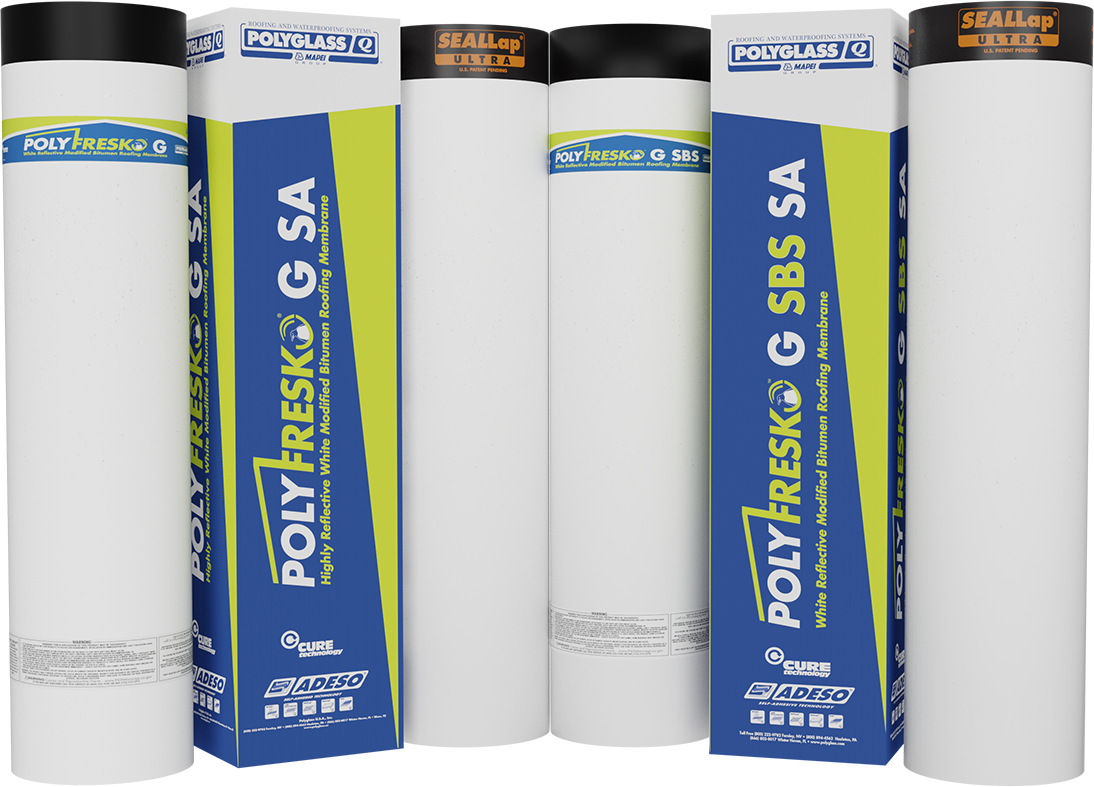
Currently, the patented, one-of-a-kind Polyfresko cap sheet range is one of Polyglass’ most innovative cool-roofing solutions, incorporating the last decade and a half of research and development.

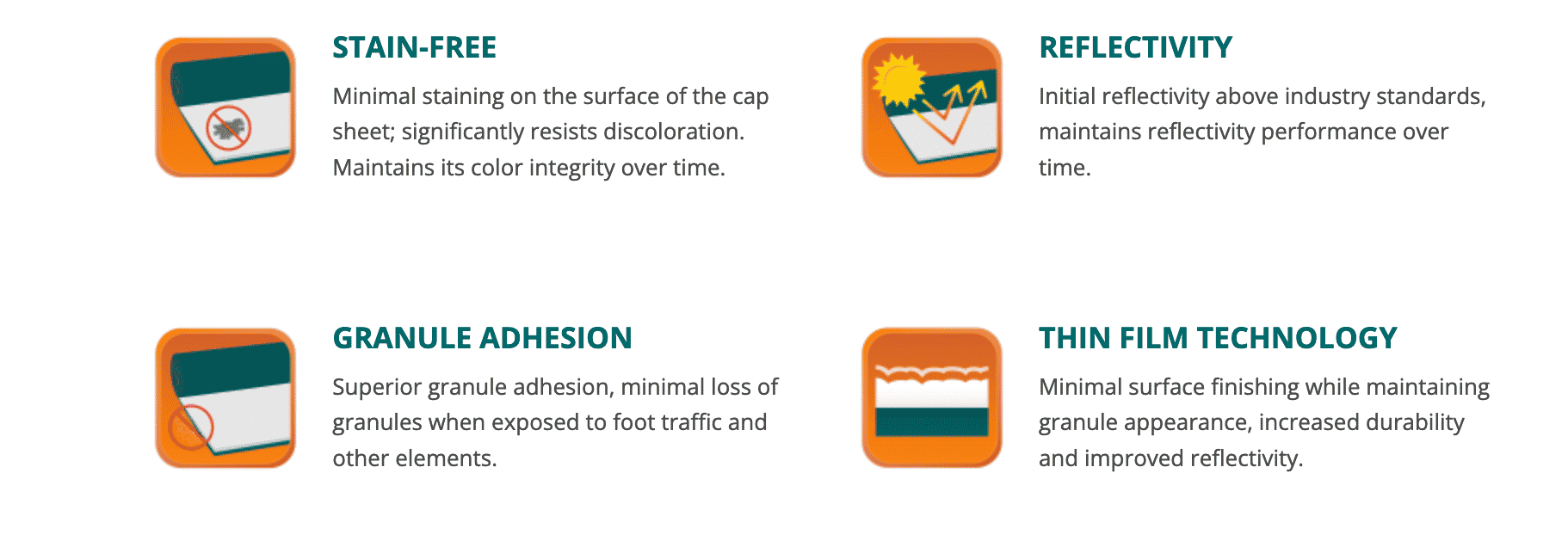
Its differentiator is the Polyfresko line’s unique use of CURE® thin film technology on top of Polyglass’ APP- and SBS-modified bitumen membranes. This technology substantially improves roofing durability, reflectiveness, and membrane emissivity–distinguishing features for cool roofing materials.

CURE thin film provides enhanced performance without affecting the installation process. The white-tinted CURE thin film is applied during manufacturing to lock in the granules and improve granule adhesion. The innovation is also solvent-free, reducing environmental impacts.

The applied technology:

  • Enhances protection and waterproofing
  • Ensures complete granule retention
  • Stabilizes ultraviolet (U.V.) rays
  • Maintains surface integrity and reflectivity via minimized:
    • Surface staining and discoloration
    • Scuffing and other impact marks
    • Torch scorching that can occur during installation

Let’s take a look at the top three benefits of the Polyfresko range.

Polyfresko Benefit 1: Ease of Installation

No innovation achieves widespread adoption—let alone topping its industry—without considering the ease of use. Regardless of how effective a roofing product is, the roofers who install it need to find the process as easy or easier than before. Easy installation is the case with all Polyglass products, as David learned when talking with the roofing contractors using Polyfresko.

“They know that whether they are installing it as a torch, APP, or SBS, it’s going to perform with the standards that they’re used to. And then they also love that Polyfresko comes in a self-adhered version as well.”

Self-Adhered Cool Roof Solutions

Polyfresko, with patented FASTLap® for end laps, can be installed with traditional heat welding and torch applications. However, the self-adhered (S.A.) versions feature one of Polyglass’ most groundbreaking innovations – ADESO® Self-Adhered Technology.

Self-adhering Polyfresko products feature a true APP or SBS top layer with the CURE thin film for maximum protection, while the aggressive, self-adhering ADESO formulation is applied beneath the reinforcement layer to streamline installation. No competitor has achieved comparable self-adhering white cap sheets. On the side laps, SA Polyfresko features Polyglass’s SEALLap® ULTRA to achieve an immediate, monolithic bond that has also tested stronger than all other installation methods.

Additional Benefits of Self-Adhered Technology

Eliminating heat welding and torch applications prevents the release of volatile organic compounds (VOCs), posing risks to roofers’ health and the environment. Plus, no pungent odor means that building occupants aren’t required to vacate the premise temporarily during restorations—which they and building owners certainly appreciate.

Across the board, SA Polyfresko offers improvements over comparable roofing materials while following a simple, three-step installation process:

  1. Align the sheet
  2. Peel off the release film
  3. Roll the sheet to ensure firm adhesion

Polyfresko Benefit 2: Effectiveness and SRI

If Polyglass’ products only led the industry in ease of installation, contractors and building owners would eventually consider alternatives. But they aren’t because the performance of Polyfresko products is also unmatched.

As David framed it, “When it comes to Polyglass and Polyfresko, the numbers—the initial SRI and the three-year SRI—exceed every other modified bright white cap on the marketplace today. And that is just something we’re super proud to be able to offer to the marketplace.”

Information on roofing products’ solar reflective index (SRI) and other metrics is made publicly available by the Cool Roofs Rating Council (CRRC). The SRIs listed in the CRRC’s product directory have been assessed and validated by CRRC-1, their independent laboratory.

SRI Ratings and the CRRC

SRI ratings—particularly the “weathered” rating determined after three years—are the hallmark of a quality cool roof. Solar reflectivity is the amount of solar energy that a roof reflects, leading to reduced heat transfer inside the building and minimizing the amount of “heat islands,” particularly in urban areas. The better the SRI, the less energy is consumed for internal temperature regulation and the less solar energy retained within the local climate.

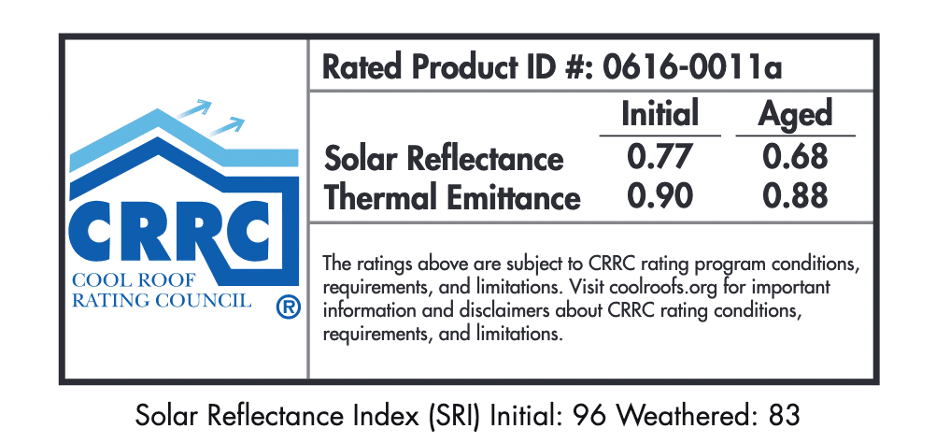
For both the initial and three-year ratings (96 and 83, respectively), Polyfresko products remain unsurpassed by any other product in the asphaltic membranes category—and more than half of all single-ply options.

According to  David, building owners and roofing contractors have increasingly turned to single-ply products for reflectiveness over modified bitumen membrane’s durability. With Polyfresko, they can now achieve the best of both.

Polyglass Polyfresko membranes also meet or exceed industry code approvals; product-specific approvals for all our products can be viewed in our Product Data Sheets. 

LEED Credits for Sustainable Sites and California’s Title 24 Part 6

Polyfresko will help building owners earn applicable credits toward Leadership in Energy and Environmental Design (LEED) certification for sustainable sites, overseen by the U.S. Green Building Council. In addition, the cool roof standards that Polyfresko achieves should also qualify for government rebates, whole-building incentives, and loans, which can be located on the CRRC’s dedicated page.

Per LEED v4.1, the latest version, low-sloped roofing materials must receive an initial SRI of 82 and a three-year SRI of 64—well below Polyfresko’s ratings. Polyfresko’s SRI also surpasses California’s requirements stipulated in Title 24 Part 6, which are the nation’s most stringent.

David’s enthusiasm for Polyfresko’s performance was evident on the podcast. “[T]here are cities, like Los Angeles City, that consider us the preferred bright white cap sheet because of those numbers alone. So it’s exciting,” he shared.

Polyfresko Benefit 3: Energy Reductions and Savings

As noted above, optimal SRI ratings translate to less energy consumption and expenditure (as with a reduced need for air conditioning). So, regardless of building code requirements and financial incentives during construction or renovation, many owners are turning to Polyglass products like Polyfresko because of these ongoing merits.

“The demand is rising because people are starting to realize what the real effect is on the energy savings for the building itself. The owners are requesting this at this point, and the designers also understand the importance of designing the systems accordingly,” David summarized.

Although anecdotal, David has also seen the energy savings firsthand.

“I personally have witnessed a cool roof go onto a school building that had two chillers running prior to the cool roof going on. And after the cool roof was installed, they were able to shut down a chiller,” David added.

Determining precise energy savings requires accounting for numerous variables, but tools like the Oak Ridge National Laboratory’s Cool Roof Calculator will help forecast them.

Only Growth on Polyglass’ Horizon

As the 30th anniversary of Polyglass US and our first manufacturing plant opening in Nevada, 2022 has been an exceptional year, one of which the Polyglass team is very proud. Polyglass’ plans for business growth and development over the next 30 years include expanded capacity, new manufacturing plants, and new product lines, including innovative waterproofing solutions and systems for below-grade structures.

If your interest in Polyfresko and Polyglass’ other innovative roofing and building envelope solutions has been piqued, contact us today to learn more!

How Energy-Efficient Roofs Help Improve a Building’s Performance

The building envelope helps protect occupants from external environmental forces and plays a critical role in improving a structure’s overall energy efficiency. Building envelope components like exterior walls and doors, roofs, ceilings, windows, and floors provide an initial thermal and air barrier between a building’s interior and exterior and determine how much energy is required to cool or heat a structure.

According to the International Energy Agency (IEA), buildings are responsible for roughly 40% of the world’s energy consumption and about one-third of global greenhouse gas (GHG) emissions. A 2019 IEA review of the energy policies of the U.S. highlighted that space heating of residential buildings accounted for the most significant energy demand in the U.S. In addition, the review showed that in 2017, residential and commercial building sectors consumed 32% of the country’s total final energy consumption (TFC) in nearly equal shares.

Improving a building envelope’s design while utilizing the most energy-efficient materials and products is essential for tackling a building’s energy consumption. This article examines how to increase a building envelope’s energy performance, focusing on cool roofing systems, materials, and technologies.

An Energy-Performance Roadmap for the Building Envelope

The key to achieving an energy-efficient building is controlling airflow, moisture, and heat transfer through the building envelope. The heat transfer and thermal conductivity of a building’s roof, foundation, and walls significantly influence how much energy is needed to meet its interior heating and cooling demands.

The IEA’s Technology Road Map report identified the following measures for improving the building envelope’s energy performance.

  • Proper air sealing with controlled ventilation for fresh air to reduce air leakage rates
  • Adequate insulation in walls, roofs, and floors, to limit heat loss in cold weather and prevent excess heating in hot weather
  • High-performance windows to balance thermal transmittance
  • Highly-reflective technology used on roof surfaces to keep building interiors cool
  • Appropriate moisture management at thermal bridges, such as the wall, floor, or roof junctions, to prevent structural damage.

How Energy-Efficient Roofs Help Cool Buildings

The more a roof can reflect ultraviolet (U.V.) radiation and re-emit the heat energy it absorbs, the less energy is needed to make a building’s interior comfortable for its occupants. As a result, highly-reflective roofs – or “cool roofs” – have increased in popularity as a passive cooling strategy to lower a building’s energy use and have proved effective in keeping a building’s interior cool in hot-weather climates. According to the CRRC, cool roofs facilitate average energy savings from 7% to 15% of total cooling costs.

Today’s cool roof technology includes light- to white-colored modified bitumen membranes with reflective granules and liquid-applied roof coatings. Light-colored roofs are better as solar reflectors and absorb less heat than their darker counterparts. According to the U.S. Department of Energy (DOE), light-colored roofs absorb less than 50% of incoming solar energy, while dark roofs absorb 90% or more. The cooler a roof’s temperature is, the less heat flows into the building’s interior, reducing the need for air conditioning.

How a Roof’s “Coolness” is Measured

The Solar Reflectance Index (SRI) calculates a roofing product’s ability to reject solar heat. A product’s total SRI value is determined using its solar reflectance and thermal emittance values. SRI values range from 0 to 100. Products with a high SRI value have lower surface temperatures and are more energy efficient. Conversely, products with lower scores are less solar-reflective and not as effective in helping to cool a building’s interior.

Because roofing materials can soil and weather over time, a roofing product’s initial SRI is measured and recorded as well as its value at three-year weathered (or aged), to determine its performance over time. Polyglass’ Polyfresko® G, for example, is a plastomeric granulated cap sheet used in low-slope roofing with an initial SRI of 96 and 83 (3-year weathered).

As the U.S. Department of Energy (UDOE) highlighted in its cool roof guidelines, different programs and state-based regulatory bodies use different SRI values to classify cool roofing products. In addition, roofing materials for low-slope roofs are measured differently from steep-slope roofing products. The examples provided include the Leadership in Energy and Environmental Design (LEED) program, which defines a cool roof as one with a minimum SRI value of 78 (if low-sloped) and 29 (if steep-sloped).

The ENERGY STAR® program’s definition of a “cool roof” is a low-slope roof with a minimum solar reflectance of 65 (initial) and 50 (aged); steep-sloped roofs that qualify as “cool” by ENERGY STAR® standards need an initial S.R. value of 25 and 15 (aged).

Understanding local building codes and laws is essential for compliance and identifying any incentive plans (such as tax credits, utility rebates, or loan programs) to encourage the adoption of cool roof technology. The Cool Roof Rating Council (CRRC) provides an updated list of financial incentive programs and rebates by each state, as does the Database of State Incentives for Renewables & Efficiency.

How to Improve Your Roof’s Energy Performance With Polyglass


Polfresko GPolyglass’ Kool Roof Solutions™ range comprises highly-reflective, white modified bitumen membranes and white elastomeric roof coatings to help reduce U.V. deterioration and increase the reflectivity of a commercial or residential building roof system.

Our Polyfresko Atactic Polypropylene (APP) and Styrene-Butadiene-Styrene (SBS) modified bitumen membranes meet or exceed most standards for cool roofing. The Polyfresko range utilizes our patented thin-film CURE Technology®, which provides a minimal surface finishing for vastly improved surface reflectivity and membrane emissivity. In addition, Polyfresko membranes resist asphaltic bleed and color staining to retain their reflectivity and color integrity.

Polyglass’ P.G. and POLYBRITE® white elastomeric coatings provide industry-leading reflectivity and U.V. protection, helping to keep building temperatures cool.

The ICU Medical Project

Our highly-reflective Polybrite products were chosen for an 80,000-square-foot roof restoration project for one of ICU Medical’s climate-controlled warehousing and distribution centers in Santa Fe Springs, CA. Polybrite cures to a highly durable and flexible membrane and has superior U.V. resistance and “cool roof” properties.

California has some of the strictest Green Building Standards Codes in the U.S., and roofing products chosen needed to meet cool roof requirements stipulated by Title 24, Part 6, of the (then) 2016 California Building Energy Efficiency Standards. Polyglass’ line of white Kool Roof Solutions products was designed to comply with these standards.

Roofing contractors C.I. Services Inc. chose our Polyglass Polybrite silicone system for the repairs, starting with our water-based Polybrite 98 Primer followed by our premium liquid applied Polybrite 90.1 Silicone Coating.

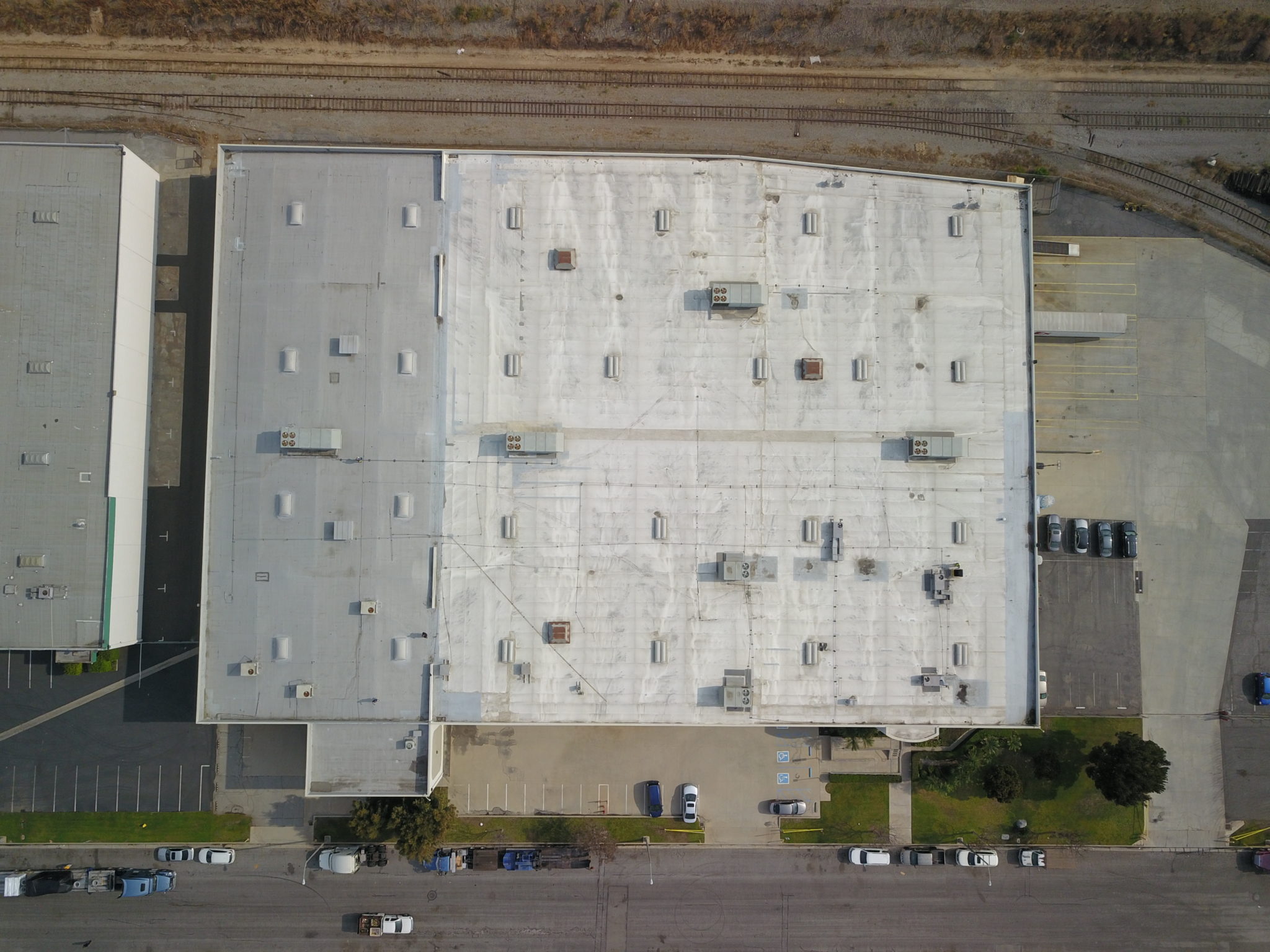
ICU Medical before
ICU Medical Project: Before


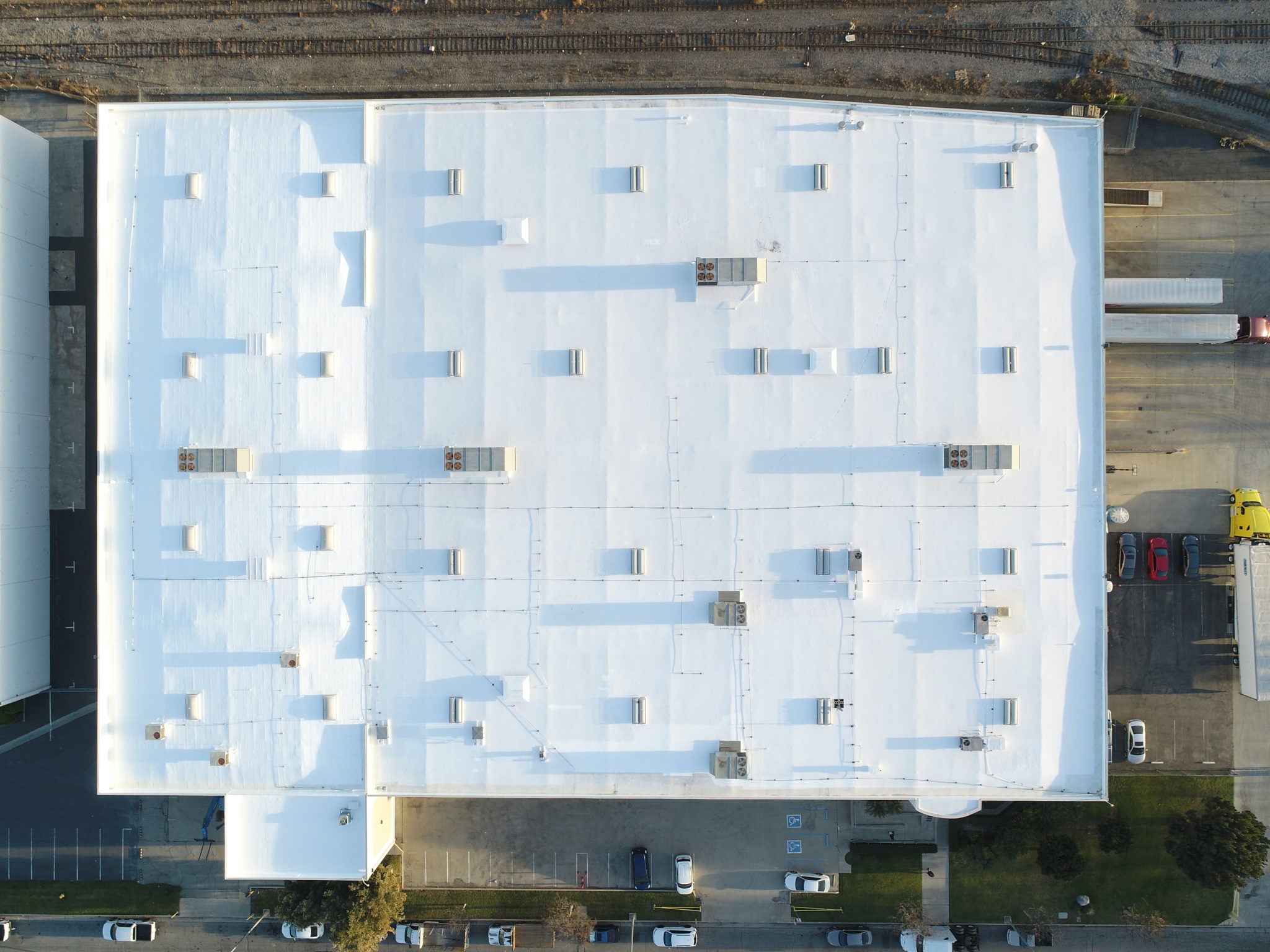
ICU Medical after
ICU Medical Project: After

Watch the YouTube video below for more before and after footage of the roof restoration for the ICU Medical warehouse.

Energy-efficient building envelope materials like help reduce a building’s energy consumption and carbon emissions and help lower a facility’s operational costs.

Get in touch with our team of experts today to discuss the best Kool Roof Solutions for your next commercial or residential roofing project.


Hurricane Ian: Winter Haven Plant Temporary Closure & Updates

September 29, 2022

To Our Entire Polyglass Community,

As Ian exits through NW FL, our thoughts are with those who have been impacted by the storm and hoping that everyone is safe and returning to normal.

We are happy to share that our Winter Haven, FL manufacturing facility weathered the storm with no significant damage and that our staff and their families throughout the state are also safe.

Our production and engineering teams are now completing their damage assessment and will then carefully inspect the entire facility to ensure that we are ready to safely resume production as soon as this weekend.

Polyglass USA – Winter Haven, FL

Normal shipping hours will resume on Monday, October 3rd

Please contact your local Sales Representative or Customer Service @ (800) 222-9782 with any questions or concerns.  

Polyglass USA

————————————————————————————————————————————————————————————————————————————–

September 27, 2022

To Our Entire Polyglass Community,

As Hurricane Ian approaches the west coast of Florida, we wanted to reach out to everyone who may be impacted by the storm.

First and foremost, we trust that everyone in the path of this storm takes all necessary precautions (NHC guidelines www.nhc.noaa.gov) and stays safe!

We understand that normal business activity may be temporarily impacted in your region and Polyglass is making every effort to ensure we do our part in having product available when and where needed.  To provide uninterrupted service, we will lean on all our manufacturing facilities and customer service centers nationally for their support as appropriate.

Please note the following update:


Polyglass USA – Winter Haven, FL

This facility will close for business/operations on Tuesday, September 27th @ 7pm EST

Scheduled to re-open on Friday, September 30th @ 7am EST

As our plant is in the forecasted path of the storm, we will continue to closely monitor the situation and communicate any updates to this schedule as necessary.

Customer Service: (800) 222-9782


Polyglass USA


###

About Polyglass

Polyglass U.S.A., Inc. is a leading manufacturer of roofing and waterproofing systems. Known for its self-adhered modified bitumen roofing systems based on the company’s patented ADESO® Technology and CURE Technology®, Polyglass also produces a full line of premium roof coatings and roof maintenance systems. As an ISO 9001:2015 certified company, Polyglass provides quality products and adds value through innovation.  For more information about the premium products and services offered by Polyglass, call 800.222.9782 or visit polyglass.us.

Waterproofing Products for Below-Grade Concrete Slabs and Structures

Adequate moisture and water control are critical for the success of any below-grade enclosure system. While concrete is a highly-durable and cost-effective building material, easy to make, and requires very little maintenance over its lifespan, it is also porous and absorbs water easily.

If untreated, below-grade concrete slabs, foundation walls, underground parking, plaza decks, or basements are vulnerable to moisture infiltration from below or outside the building. Concrete masonry units (CMUs) and pre-cast or poured concrete wall panels or floor slabs require appropriate waterproofing to block any moisture from moving up or laterally through the concrete that could lead to the deterioration of below-grade structures.

This article looks at how moisture impacts below-grade concrete structures and the Polyglass waterproofing systems available to seal them.

How Do Below-Grade Concrete Structures Get Wet?

There are several ways that moisture can enter a building through its below-grade components.

  • Concrete foundation slabs and walls can come into direct contact with groundwater, surface water, rainwater, plumbing water, or any water leaks from drainage issues on a construction site.
  • Any surface defects, cracks in concrete before or after hardening, design faults, or the improper installation of control or expansion joints can allow moisture into the building envelope.
  • Wet soil or material used to backfill a foundation or structural area can also impact below-grade slabs and foundation walls.
  • Concrete that hasn’t been allowed to dry correctly is more permeable to liquids and gasses, so wet materials installed during construction leave building enclosures vulnerable to water penetration.

Water Damage from Freeze-Thaw Cycles

Enclosed materials that haven’t been allowed to dry adequately raise indoor humidity levels, leading to condensation-related issues such as mold, poor air quality, health issues for occupants, and the structural decay of floors, walls, and metals.

In addition, as wet concrete dries, water vapor creates small cracks (capillary networks) in the material, leaving it vulnerable to moisture infiltration. Buildings in cold and wet climates are exposed to freezing temperatures, causing water in cracks and pores to freeze and expand, increasing internal pressures. As temperatures rise, the frozen water thaws, leaving behind enlarged cracks. These repeated freeze-thaw cycles weaken the concrete and cause slabs and foundation walls to scale and crumble.

Chemical and Salt Damage to Concrete

Concrete can also disintegrate when exposed to harmful chemicals, such as acid waters, ammonium chloride, or aluminum chloride, or when alkaline or acidic-based solutions from the surrounding soil or water penetrate the concrete and cause chemical reactions. These chemicals and chemical reactions can also damage the waterproofing products and barriers applied to protect concrete slabs and walls from water migration.

Any dissolved salt present in water and soil at building sites will have a degrading effect on concrete. As the calcium chloride in salt reacts with the calcium hydroxide in concrete, it forms calcium oxychloride, which is corrosive to reinforcing steel and causes concrete to crack and crumble.

Below-Grade Waterproofing Products and Solutions

Water control measures at building sites include draining surface water, rain, and stormwater away from buildings and keeping moisture-sensitive products dry during construction. In addition, waterproofing membranes, concrete surface primers, and drainage mats are all used as part of comprehensive waterproofing systems to protect below-grade building components from water damage.

Read our blog for more insights on choosing the right waterproofing system for below-grade structures.

Pre-Applied and Post-Applied Waterproofing Membranes

Water-impermeable materials like waterproofing membranes act as a barrier against moisture, water, and gas to help protect below-grade materials from water intrusion and lateral water migration.

Waterproofing systems can be:

  • Installed before (pre-applied) or after (post-applied) the concrete is placed
  • Permanently attached (bonded) or non-attached to the concrete works
  • Applied to the outside (positive-side) or inside (negative-side) of concrete structures

Positive-side waterproofing membranes are generally pre-applied, while negative-side systems are post-applied to concrete surfaces. Concrete slabs serving as mud mats below foundations typically require fully-adhered waterproofing membranes.

The primary advantage of a positive side waterproofing system is that water is prevented from entering the substrate surface entirely, protecting it from freeze-thaw cycles and any corrosive chemicals in the surface water or groundwater.

Polyglass’ Pre-applied Bonded Waterproofing Membranes

Mapeproof™ AL PRO
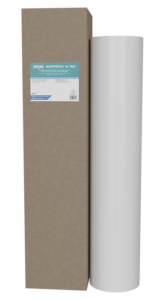
Polyglass’ Mapeproof™ AL PRO is a pre-applied, high-density polyethylene (HDPE) waterproofing membrane that bonds integrally to poured concrete. HDPE is known for its high strength-to-density ratio, resistance to naturally-occurring chemicals found in soil, and ability to withstand higher temperatures. It is also impervious to water, acids, solvents, and common chemicals, making it an ideal waterproofing material for below-grade structures.

Fully-bonded waterproofing membranes like Mapeproof AL PRO help prevents lateral water migration between the mud slab (or substrate) and barrier, which stops water from migrating to cracks in concrete that can later freeze, expand, and cause scaling or crumbling. In addition, Mapeproof AL PRO can be applied to vertical or horizontal surfaces and is designed as a kick-out roll to be walked on in horizontal installations, which is time- and labor-saving.

Mapeproof™ HW/ SW
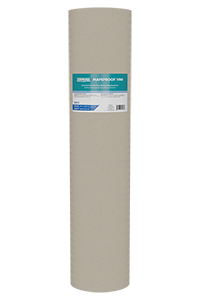
Polyglass’ Mapeproof™ HW and Mapeproof™ SW waterproofing membranes are woven and nonwoven polypropylene (PP) geotextile fabrics encapsulating sodium bentonite clay. The nonwoven PP fabric is needle-punched through to the woven fabric, mechanically locking the sodium bentonite clay with thousands of fibers and forming a mechanic bond.

Sodium bentonite is a natural sealant, which expands when wet to form a single waterproofing membrane, while PP is known for its chemical resistance, elasticity, toughness, and fatigue resistance. Both Mapeproof HW and Mapeproof SW are ideal for horizontal slabs, vertical blindside, and backfilled wall applications. While Mapeproof HW is suitable for installing over damp or green concrete to prevent water migration, Mapeproof SW includes a special additive for mitigating the effects of salt and contaminated water on the swell index.

Polyglass’ Post-Applied Self-Adhered Waterproofing Membranes

Mapethene™ LT60/HT60
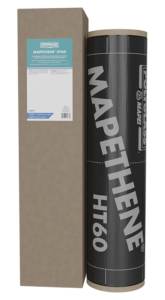
 

Mapethene™ LT60 and Mapethene™ HT60 provide an excellent barrier against moisture, water, and gas. Both are post-applied, self-adhered waterproofing membranes for below-grade foundations, horizontal decks, tunnels, and balconies where structural waterproofing is needed.

Mapethene LT60 and MapetheneHT60 membranes are cold-applied and comprised of a rubberized adhesive with an HDPE layer, making them highly durable and resistant to chemicals and gas vapor intrusion.  Mapethene LT60 is suitable for dry-weather, low-temperature applications, where the ambient and substrate temperatures are between 25°F and 60°F (-4°C and 16°C). On the other hand, Mapethene HT60 has been developed for dry-weather, high-temperature applications where the ambient and substrate temperatures are above 40°F (5°C).

Mapeseal™ GC
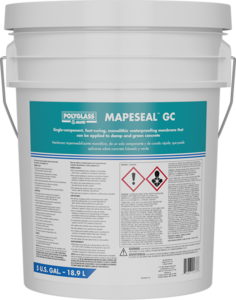
Polyglass’ Mapeseal™ GC is a single-component, liquid-applied, structural waterproofing membrane that can be post-applied to damp and green concrete and on vertical and horizontal surfaces.

Mapeseal GC does not require a primer, is very low in odor, guaranteed not to shrink, and can be applied in a variety of thicknesses or with reinforcing Mapeseal™ Fabric, making it customizable to any job.

Mapedrain™ Drainage Mats
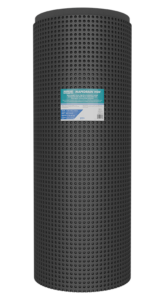
Drainage mats, or drainage boards, protect above- and below-grade waterproofing membranes by channeling water away from installed waterproofing systems and relieving backfill and hydrostatic pressure.

Polyglass’ Mapedrain™ drainage boards or mats serve as a protection course for Polyglass above-grade or below-grade waterproofing membranes. Mapedrain mats are made from a woven geotextile filter fabric that prevents intrusion of soil, concrete, or construction grouts into the flow channels.

Mapedrain drainage boards are lightweight and easy to install, provide cost savings and eliminate the need for aggregate backfill. The Mapedrain core is 40% post-industrial recycled PP material, and each mat includes a polymeric protective film on the back side to provide additional protection to waterproofing membranes. Polymeric films are impermeable to gases and liquids and offer surface protection from corrosive substances. Mapedrain drainage mats can be permanently immersed in water without deteriorating or being affected by chemicals, bacteria, dilute acids, and alkalis.

Mapeprime™ 720W
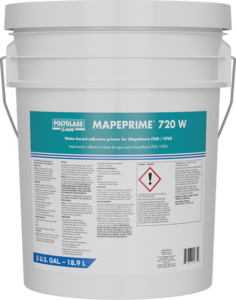
Water-based Maprime™ 720W is an adhesive primer suitable for vertical and horizontal applications and can be used to attach Mapedrain™ drainage composites to Mapethene LT60/HT60 and Mapeseal GC.

Seal the Building Envelope with Polyglass

Polyglass has a team of industry experts ready to assist you with selecting the right below-grade waterproofing system to meet your project’s design, schedule, and budget needs. Contact us today to discuss your project requirements – we are happy to help!
9 Design Considerations for Below-Grade Waterproofing

The rise in building material costs is putting significant pressure on meeting project budgets. Building owners/developers are asking project teams to look for opportunities to value engineer portions of each project in order to meet budgets more effectively. The below-grade waterproofing budget is often one of the areas that receive a lot of scrutiny as it is out of sight and out of mind.

Below-grade waterproofing isn’t flashy, it doesn’t provide an aesthetic value and it is often forgotten about after the building is complete unless you have leaks. Leaks can cause delays to occupancy, disrupt existing tenants, and cause significant damage to a structure and its contents. Water infiltration accounts for more litigation than any other construction defect.

Repair costs can sometimes exceed the initial project waterproofing budget if the correct system is not chosen and designed appropriately. Consider other areas to stretch costs and protect your waterproofing system budget because you only have one opportunity to “do it right.”

Choosing the Correct Waterproofing System for Below-Grade Structures

So, what is the process for selecting the right system for your project? There are several design considerations to review that are specific to each site/project prior to selecting the proper waterproofing system. Some of the considerations are listed below:

  1. Groundwater elevation (water table)
  2. Intended use of the structure, e.g., museum, hospital, occupied space, parking garage
  3. Drainage/water management system
  4. The design of the structural foundation
  5. Soil and or groundwater contamination
  6. Construction methods, e.g., cast-in-place concrete, CMU, shotcrete, pre-cast panels, etc.
  7. Construction sequencing
  8. Substrate conditions and required preparation
  9. Climate and potential weather during construction

Once these design considerations are vetted and you are ready to select the proper type of waterproofing for your project, let the team at Polyglass help. Every project will look different and comes with its own unique challenges and variables to consider. Ensuring that the system is tailored to the project site specifics, the overall level of risk, and performance expectations is the only formula for success. At Polyglass, we have a team of industry experts here to assist you in the selection of the right system to meet your project design, schedule, and budget needs.

Not all waterproofing systems are created equal. Polyglass has a full portfolio of products for below-grade applications and can guide you through the selection process for a successful project.

Contact us today to find out how we can help you seal your below-grade structures within budget.


Cold Weather Roofing Systems for Low-Slope Roofs

Seasonal weather conditions pose several challenges to low-slope roof installations and repair work. The daily stress of the natural elements also causes constant wear and tear to existing roofing systems. How can you best keep your low-slope commercial or residential roof as damage-free as possible during the cold winter months?

This blog explores the Polyglass low-slope roof membranes and products uniquely designed for colder-weather climates and applications.

All In A (Cold) Day’s Work—Top Roofing Challenges

The weather plays a vital role in the success or failure of a roofing installation or repair project. Local climate temperatures on either side of the spectrum (whether too hot or too cold) can adversely affect a roofing system due to the high probability of condensation in extreme conditions.

While low humidity and high heat create an optimum environment for adhesive curing, high humidity levels at any stage of the installation process cause condensation on adhesive membrane surfaces, extending the time needed for adhesives to dry.

Condensation leads to the inadequate bonding of surfaces needing to bind together and impacts material seam welds and the roofing substrate. As a result, the system performance and lifespan of a low-slope roof are also affected.

Low Temperatures Pose Other Problems as Well

Any rain, dew, ice, frost, or snow on the roof can delay or even prevent repairs or new installations. When temperatures are below the ambient temperature range (40°F–45°F/ 4°C–7°C), materials also need to be stored appropriately to stay warm. Too-cold temperatures or wind chill cause products to stiffen, making the application process difficult. Cold weather conditions can also cause stress cracking of materials as they are unrolled.

Common Shortcuts Create More Issues Than They Solve

While it may be tempting for contractors or installers to look for workarounds to get a job done regardless of the weather, shortcuts can work against the roof’s performance in the long run.

  • Overheating asphalt to stay hot enough for adequate bonding can cause the oils to evaporate and the material to become brittle and hard. Exposing the asphalt to high heat over a prolonged period expedites the effect, giving way to cracking and an inability to seal.
  • Asphalt fumes are also dangerous, putting those who work with it at risk of headaches, fatigue, sensitization, throat and eye irritation, reduced appetite, and coughing.
  • Using economy-grade products is another way contractors take shortcuts. Though they may appear to do the same job as premium ice and water shields, they may not offer as much protection from extreme elements.
  • Because of its organic components, felt roofing membranes like tar paper are less sun- and wind-resistant than other underlayment systems. This is because of how the material dries out in the heat.
  • Felt also weighs more, and when exposed to humidity and heat, it deteriorates at a faster rate. 

The solution is using roofing materials that are designed for cold-weather applications.

Polyglass’ SBS Modified Bitumen Membranes for Cold Weather Use

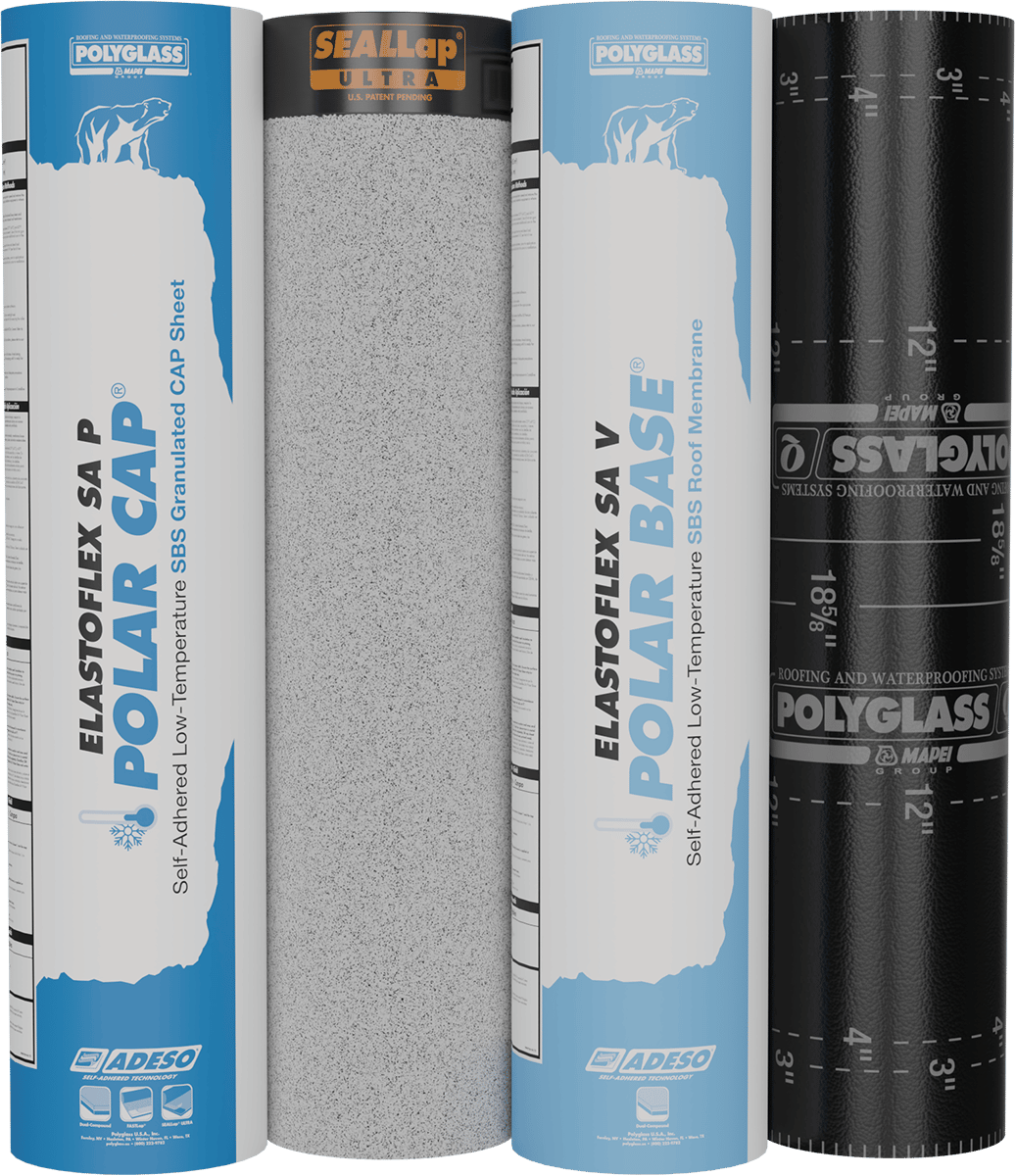
Cold climates are no match when you have the right product on your side. Polyglass’ Elasoflex SA V Polar Base® membranes and Elastoflex SA Polar Cap Sheets® help roofing contractors and installers face cold-weather roofing challenges head-on.

Both the Elastoflex SA V Polar Base membrane and Elastoflex SA P Polar Cap sheet are designed for use at below ambient temperatures (between 25°F–60°F/-4°C–16°C) as an effective defense against harsh elements and humidity. The Elastoflex SA V Polar Base membrane is manufactured using patented ADESO® Technology. It features a strong woven polyester mat with high-performance fiberglass reinforcement to create a stable and insulated roofing system. This mat enhances tear strength and puncture resistance, creating a robust solution against natural forces on the rooftop. Polyglass’ self-adhered (SA) technology removes the need for torches, hot asphalt, or bonding adhesives on the job site.


Elastoflex SA P Polar Cap is a granule surface that is also self-adhered, using SBS dual-compound SA technology, and an ideal solution for low-slope roofing. The reinforced polyester mat is excellent in preventing tears and punctures from forming.

Watch our short video below on the top advantages of our Polar Base membranes and Polar cap sheets.

When the Elastoflex SA P Polar or other approved Polyglass self-adhered cap sheets are used with the Elastoflex SA V Base, the benefits increase, which include:

  • Impeccable adhesion and stability
  • Cleaner application,
  • Shorter installation times
  • UV-stabilized and long-lasting

Cold Weather Roofing Projects Using Elastoflex Polar Membranes

Martha's Vineyard roofing project - photo 4


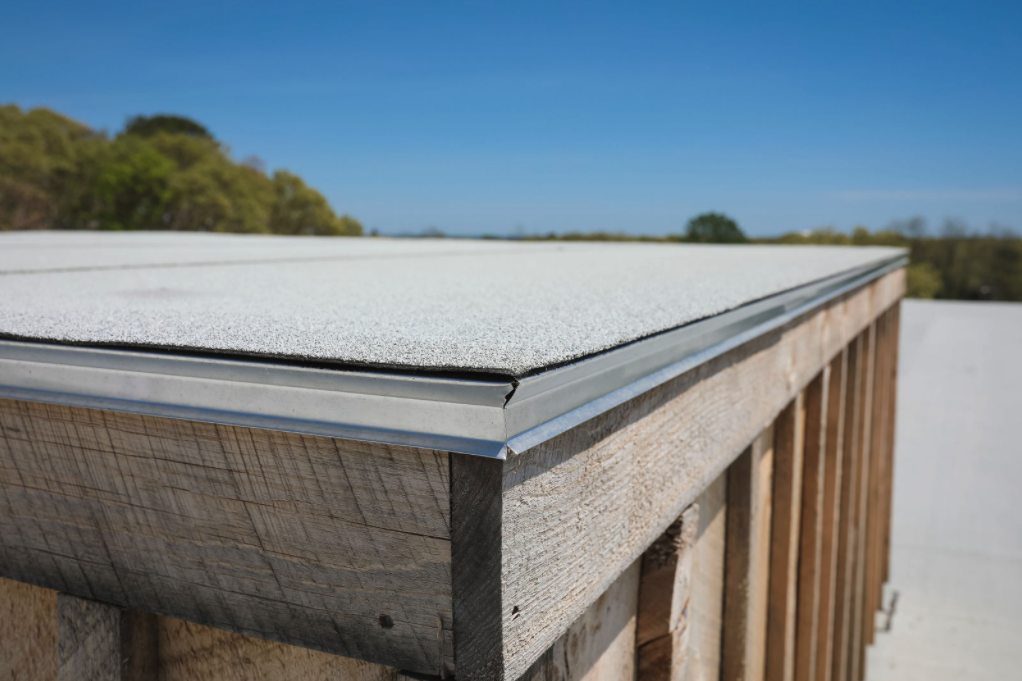
MARTHA’S VINEYARD STORAGE FACILITY: When a new construction storage facility on the Massachusetts island of Martha’s Vineyard needed a new roof that could withstand the occasional hurricanes and Nor’Easters that affected the area, Polyglass’ Elastoflex roofing system was the product of choice. Read more about the project here.

Triton's Trumpet roof and ocean

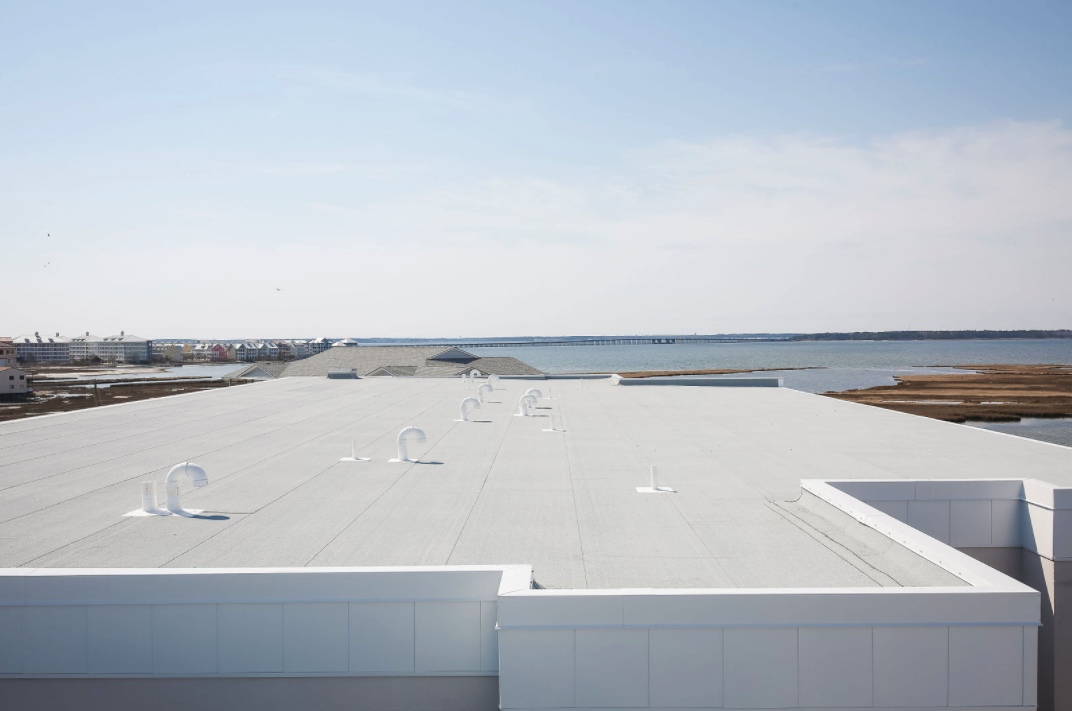
TRITON’S TRUMPET CONDOMINIUMS: The Elastoflex roofing product line was also used to repair significant roof damage to two buildings at the Triton’s Trumpet Condominiums in Oceans City, Maryland, after Tropical Storm Isaias hit in 2020. Find out why here.

Enjoy Increased Efficiency During Cold-Weather Installations and Repairs

Cold weather roofing membranes can provide excellent resistance against severe weather conditions. To stay one step ahead and prevent unnecessary costs for repairs, it’s worth investing in premium products and solutions.

Polyglass’ expansive product line provides first-rate coverage for any challenge you may have with your roofing application. Our Elastoflex Polar base and cap sheets are specially formulated for cold-weather installations.

For technical questions regarding which systems are best for your project, reach out to our team of experts.

Below-Grade Waterproofing Solutions for Building Envelope

Smart civil architect engineer inspecting and working outdoors s

Roof and wall systems, exterior doors, windows, and below-grade systems form a building’s envelope. These systems protect occupants from external environmental forces, such as wind, sun, rain, and snow, and help balance and control the internal environment.

Inadequate waterproofing of the building enclosure exposes occupants to health risks while gambling with a structure’s overall performance and longevity. Water-related damage above ground is more noticeable for fixing to prevent further deterioration of a structure; similar issues below grade can go undetected for a very long time.

Key stakeholders must find proactive ways to protect below-grade elements during a building’s planning, development, and construction phases to prevent the need for expensive repairs. Let’s explore the risks of inadequate waterproofing below grade and the products and solutions available to help prevent or halt future water damage.

Why Below-Grade Systems Need Proper Design and Waterproofing

Careful consideration is needed to design below-grade enclosure systems to prevent common issues related to poor performance. The structural integrity of any building elements below ground can become compromised when exposed to weathering, foot traffic, thermal effects, moisture build-up, or water leaks.

Below-grade structural waterproofing is necessary for preventing costly water damage to any part of the building below ground level, including foundation walls, below-grade plaza decks or basements, and shallow building foundations like slab-on-grade foundations.

Buildings in low-lying areas close to swamps, flood plains, rivers, and lakes are especially susceptible to water infiltration and moisture damage.

Common issues related to below-grade moisture build-up or water damage include:

  • Efflorescence or crystalline salt deposits that form in basements, on floors, or crawlspace walls
  • The development of structurally damaging mold
  • Cracks in walls, or walls that bow inwards or outwards due to hydrostatic pressure
  • Strange and unpleasant smells in basements or crawlspaces
  • Decay and corrosion of steel embedded in concrete slabs

Top Challenges for Repairing Below Grade Systems

Unlike the rest of the building envelope, below-grade structures are not frequently replaced or easily accessed for repairs; they are usually designed to last a building’s approximate lifespan.

Water intrusion and moisture damage below grade can go unnoticed until it affects the building’s structural integrity, air quality, or indoor humidity levels. Excavating below grade for repairs is costly, so appropriate moisture protection of subsurface building components during construction is needed to prevent water intrusion, leakage, and drainage issues that lead to building deterioration.

A range of below-grade waterproofing products and systems have been developed to seal the building envelope properly, protect its structural integrity and minimize the need for expensive maintenance and repairs.

An Overview of Below Grade Waterproofing Systems

Properly waterproofing a building’s foundation is critical to the success of a structure. A below-grade waterproofing system protects structures against water infiltration. It consists of interacting waterproofing components that help prevent water intrusions and lateral water migration, including:

  • Waterproofing membranes
  • Protection, drainage, and insulation courses
  • Water stops
  • Expansion and control joints
  • Flashings and counter flashings
  • And overburden such as cast concrete, pavers, and wire mesh or rebars

Different Waterproofing Application Types

Waterproofing products can be applied to the exterior (or positive side) of a building’s subsurfaces, a building’s interior (or negative side) subsurfaces, or beneath a building’s structural slabs (its blind side).

These products are either post-applied (applied after foundational walls and floors have been poured) or pre-applied before the walls or floors have been built.

Positive Side Waterproofing

Positive side waterproofing products are post-applied on external building surfaces to prevent groundwater or surface water from infiltrating a building’s interior. This approach is appropriate when below-ground structures can be readily accessed and waterproofed from the outside.

Examples of positive side waterproofing products include vapor barriers, fluid-applied membranes, single-ply membranes, hot-applied bitumen systems, bentonite clay, and reinforced sheet-membrane systems. In addition, protection boards or insulation layers are installed over waterproofing membranes to protect the membrane from mechanical damage that can occur during backfilling.

Negative Side and Blind-Side Waterproofing

When ready access to below-grade building elements is not feasible, negative or blind-side waterproofing is required. Negative-side waterproofing is post-applied to internal building surfaces to stop water from reaching a building’s interior. Blind-side waterproofing is pre-applied between the ground and the underside of structural slabs to help seal and protect the foundation from water intrusion.

Horizontal and Vertical Waterproofing Applications

While vertical waterproofing is used to seal vertical wall envelopes above and below grade, horizontal waterproofing is needed for underground structures, such as basements and tunnels made from horizontal concrete or mud slabs. Horizontal waterproofing applications are also required when horizontal slabs are used as roofs for below-grade parking decks.

Polyglass’ Below-Grade Waterproofing Products

Polyglass’ complete range of superior below-grade waterproofing products and systems covers all structural waterproofing specifications and requirements, including waterproofing for decks, plazas, and elevated decks.

Our waterproofing solutions for the building envelope now include pre-applied and vertical blind-side waterproofing, post-applied foundation wall waterproofing, waterproofing primers, and accessories.

Polyglass Below-Grade Waterproofing Membranes

Mapeproof AL Pro Product Below-grade Waterproofing

Pre-applied: Mapeproof™ AL PRO is a pre-applied, fully bonded HDPE waterproofing membrane that is ideal for horizontal slabs and vertical blind-side applications. Mapeproof AL PRO bonds integrally to poured concrete, forming an adhesive bond, and is designed to protect below-grade structures from water intrusion and lateral water migration.

Post-applied: Mapethene™ LT60 and Mapethene™ HT60 are post-applied self-adhered waterproofing membranes for below-grade structures and elevated decks. Mapethene LT60 is ideal for low-temperature applications (between 25°F – 60°F / -4°C – 16°C), while Mapethene HT60 is suitable for installations where the ambient temperature is above 40°F (5°C). Both membranes are cold applied without using flames.

Below-Grade Solvent and Water-Based Waterproofing Primers

Self-adhering waterproofing membranes require compatible surface primers to stick the membrane in place. Polyglass offersMapeprime below grade waterproofing primer solvent- and water-based adhesive primers with our Mapethene LT60/HT60 waterproofing membranes.

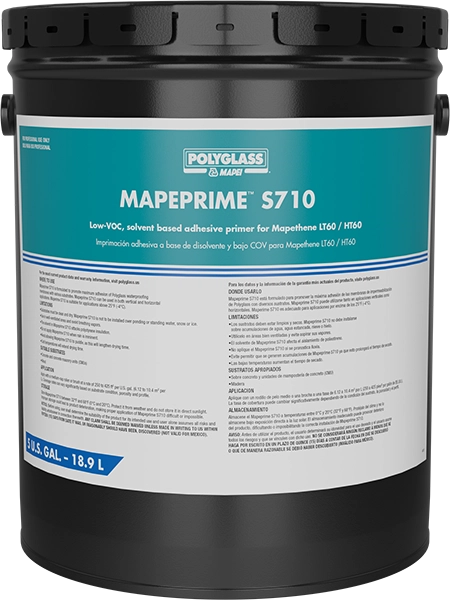
Solvent-based: Mapeprime™ 710 is a low-VOC, solvent-based adhesive primer for Mapethene LT60/HT60 and is also for vertical and horizontal applications. The primer is quick-drying and improves the adhesion of LT60/HT60 membranes to many substrates.

Water-based: Mapeprime™ 720W is a water-based and non-flammable adhesive primer for Mapethene LT60/HT60. It is also quick-drying and used for vertical and horizontal applications and can be used to attach Mapedrain™ drainage boards or mats to Mapethene™ and Mapeseal 250GC.

Seal Your Entire Building Envelope with Polyglass

Polyglass® U.S.A., Inc. is a leading manufacturer of high-quality modified bitumen roofing and structural waterproofing products and solutions for the building envelope. At Polyglass, we “Seal the Envelope™” with solutions to protect your entire building, from its foundation to its walls and roofing systems.

Contact us today to learn more about our innovative waterproofing solutions.